RESEARCH
The Hard-to-Abate Sector Gets Its First Real Test
Air Liquide has commissioned the world's first industrial-scale carbon capture pilot dedicated to cement production in southern France.
19 Jun 2026
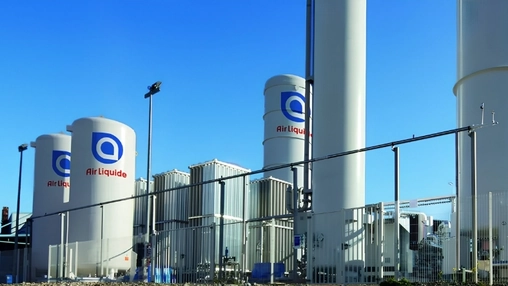
Cement kills quietly. Responsible for roughly 8% of global carbon dioxide emissions, it ranks among the hardest materials to clean up. Unlike coal power, where electrification offers a clear exit, cement must emit CO2 as a chemical byproduct of making clinker. No workaround exists. Only capture will do.
On June 10th, Air Liquide commissioned a pilot unit at Holcim's CaptureLab facility in Martres-Tolosane, southern France. Powered by the company's Cryocap FG technology, the unit processes 3,000 cubic metres of flue gas per hour, removing impurities and concentrating CO2 before final purification. Holcim calls the site the world's first industrial-scale carbon capture test platform built exclusively for cement production.
That claim carries weight, though "industrial-scale pilot" invites scrutiny. A genuine cement plant produces far more than this unit handles. Still, the facility's open structure is genuinely useful. Third-party manufacturers and researchers may test competing capture technologies side by side, sharing a real operating environment rather than a laboratory simulation. Few heavy industries have built comparable shared infrastructure.
Armelle Levieux, a member of Air Liquide's Executive Committee, framed the milestone in broad terms. "We are proud to commission this industrial-scale pilot at Holcim's CaptureLab, a project that marks a significant step forward in the decarbonization of the broader cement industry," she said. Ambition is not the constraint here; capital and deployment speed are.
For the technology to matter globally, results from Martres-Tolosane must translate to commercial-scale rollout across hundreds of plants. Carbon capture remains costly, energy-intensive, and dependent on CO2 storage infrastructure that barely exists in most markets. Validated technology at pilot scale is a precondition, not a solution.
Policymakers tracking industrial decarbonization should note the model. Open test platforms reduce duplication of effort and lower the threshold for smaller firms to prove competing approaches. What they cannot do is substitute for the carbon pricing regimes and public investment that make capture economically rational at scale.
Related News


SUBSCRIBE FOR UPDATES
By submitting, you agree to receive email communications from the event organizers, including upcoming promotions and discounted tickets, news, and access to related events.