PARTNERSHIPS
From 3,000 Candidates to Five: CCUS Hub Study Picks Finalists
A major consortium has shortlisted five carbon capture hubs across India, Indonesia, Malaysia, and Australia after screening over 3,000 sites
23 Jun 2026
Somewhere between a coal-fired steel plant in India and an offshore geological formation in Australia lies one of the region's more awkward problems: the gap is enormous, the carbon is real, and the pipeline does not yet exist.
On April 20th a consortium studying carbon capture and storage across Asia-Pacific announced it had narrowed more than 3,000 candidate sites to five priority locations spanning India, Indonesia, Malaysia, and Australia. Three new partners joined simultaneously, among them Japan's K-LINE, a shipping company whose arrival completes what the consortium calls a full value chain, from industrial emitter to geological grave.
Michitomo Iwashita, senior managing corporate officer at K-LINE, stated that the company "believes CCUS will play a vital role in realising a carbon neutral society" and pledged to "actively contribute, from the perspective of maritime transportation, to the establishment of a sustainable CO₂ value chain."
That maritime framing matters. Storage formations in this part of the world rarely sit close to the factories that need them. Crossing those distances by ship is not a romantic choice; geography leaves little alternative.
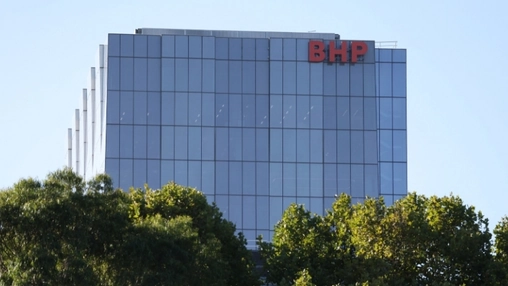
Alongside K-LINE, BHP and ArcelorMittal Nippon Steel anchor the group from the mining and steelmaking sides, sectors where electrification offers limited relief. Chevron adds upstream energy knowledge. Together, they represent something rarer than any individual company's commitment: a coalition with enough technical breadth to assess capture, transport, and storage as a single engineering problem rather than three separate ones.
For the region's industrial clusters, shared infrastructure could change the arithmetic considerably. Per-tonne costs for capture and storage fall when pipelines and vessels serve multiple emitters at once. No consortium announcement has yet produced a tonne of storage, of course, and the five shortlisted sites still face extensive feasibility work. But the narrowing of 3,000 options to five is not a trivial exercise, and the addition of a shipping partner suggests the group is designing for operational reality rather than regulatory optics.
Whether governments across four jurisdictions can align permitting, liability frameworks, and financing fast enough to match the consortium's ambition is a separate question, and probably the harder one.
Related News


SUBSCRIBE FOR UPDATES
By submitting, you agree to receive email communications from the event organizers, including upcoming promotions and discounted tickets, news, and access to related events.